

10 Retention Strategies for your Dojo
- Structure the first 90 days with deliberate onboarding to prevent early student dropout before it happens.
- Build community through instructor relationships, events and milestone recognition as the strongest long-term retention driver.
- Use data systems to track attendance patterns, spot at-risk students early and automate consistent communication touchpoints.
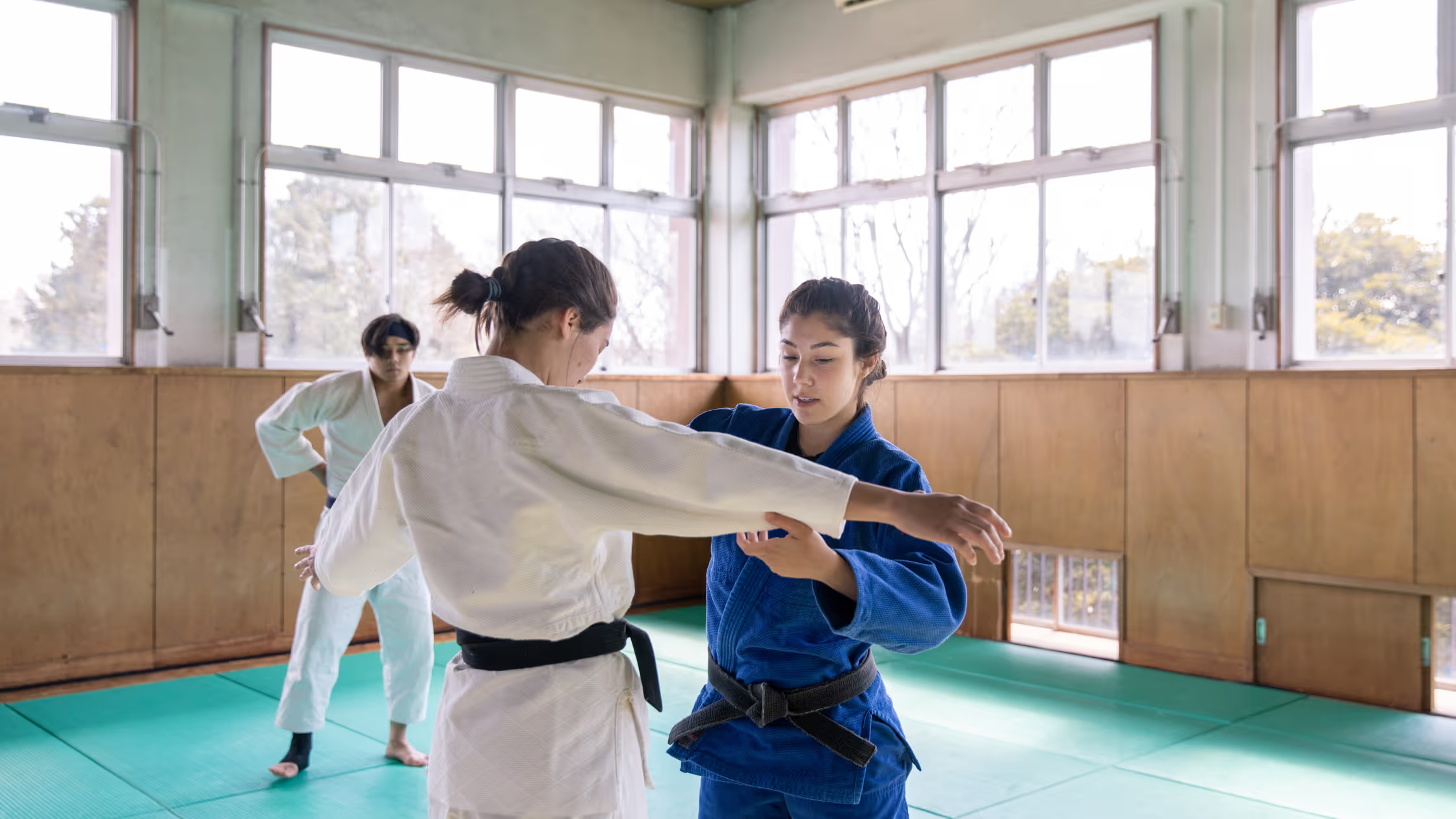
How to Retain Martial Arts Students: 10 Proven Strategies for Dojo Owners
Martial arts student retention is what separates dojos that grow year after year from those that constantly replace departing students with new ones. Acquiring a new student costs roughly five times more than keeping an existing one, which means a dojo with poor retention is not just losing students. It is spending more to stand still.
The good news is that the dojos with the strongest retention rates are not doing anything mysterious. They are running structured onboarding, tracking attendance, communicating consistently and giving students a clear reason to keep training. Most of these strategies cost very little to implement. They just need to be done deliberately and consistently.
This guide covers ten retention strategies that work across martial arts disciplines, whether you run a karate dojo, a Brazilian jiu-jitsu academy, a taekwondo school or a mixed martial arts gym.
1. Structure the first 90 days around onboarding, not just classes
Starting martial arts is intimidating for most people. New students are walking into an unfamiliar environment, learning new movements and trying to figure out the culture and etiquette of your school. If they feel lost or overwhelmed in those first few weeks, they will not tell you. They will simply stop showing up.
The dojos with the strongest early retention treat the first 90 days as a structured onboarding period, not just a series of classes.
This means sending a welcome message within 24 hours of sign-up that sets clear expectations for the first visit. It means following up after the first session to ask how it went and recommend a specific next class. And it means pairing new students with a more experienced training partner who can help them feel comfortable during their first few weeks.
A welcome pack that includes your class schedule, a dojo etiquette guide and answers to common beginner questions can make a big difference. So can an introductory assessment or one-on-one session where a coach covers the basics and helps the student set initial training goals.
For a deeper look at how the first 90 days work as a retention system, see our guide on how to retain new members in the first 90 days.
2. Build community into every interaction
Students do not just come back for the techniques. They come back for how they feel when they walk into your dojo. Community is one of the strongest drivers of long-term retention in any fitness business, and martial arts schools have a natural advantage here because of the culture of mutual respect, shared challenge and progression that is built into the training.
The dojos that retain well make belonging a deliberate part of the experience, not something that happens by accident.
This looks like instructors who remember names and use them. Belt ceremonies that celebrate achievement in front of the whole school. Social events, family barbecues or team outings that build friendships outside the training room. Challenges and leaderboards that create shared goals. And milestone recognition for things like first sparring session, 100th class or one-year anniversary.
The stronger the relationships between students, the harder it becomes to leave. People will push through a training plateau if they feel connected to their training partners. They will not push through it if they feel like a stranger.
3. Make progress visible and trackable
Martial arts is a long journey. A white belt looking at a black belt can feel like the gap is insurmountable, and without clear markers of progress along the way, motivation fades.
The belt system itself is one of the most powerful retention tools in martial arts, but only if it is well-structured. Students need to know exactly what is expected at each level, how long the typical journey takes and what they need to demonstrate to be eligible for their next grading.
Beyond the belt system, consider how you track and communicate progress more broadly. Member management tools can automatically notify students when they have reached an attendance milestone or become eligible for their next grading. Instructor feedback, whether verbal in class or through periodic progress notes, reinforces the sense that someone is paying attention to their development.
The more visible and concrete you make progress, the more motivated students stay.
4. Make it easy to attend with smart scheduling
You might run the best classes in your area, but if your schedule does not work for your students, they will not come. And when attendance drops, cancellation follows.
Look at your timetable from the student's perspective. Are beginner classes offered at multiple time slots, or is there only one option per week? Can students book online through your website or a mobile app, or do they need to call or message you? Are waitlists available for popular sessions so no one misses out?
Use your attendance and reporting data to spot patterns. If a class is consistently under-attended, it might be the wrong time slot rather than the wrong class. If a popular class has a long waitlist, it might be worth adding a second session.
The easier you make it for students to attend, the more consistently they will.
5. Automate your communication so nothing falls through the cracks
Consistent communication is one of the simplest retention levers, and one of the first things to slip when life gets busy. If you are relying on memory to send follow-ups, birthday messages, grading reminders and missed-class check-ins, some will get missed. And the students who fall through the gaps are often the ones who leave.
Automated communication tools let you set up sequences that run in the background: welcome emails for new students, class reminders, payment notifications, birthday messages, grading eligibility alerts and re-engagement messages when attendance drops.
The automation handles the consistent, repeatable touchpoints. That frees you and your instructors to focus on the personal conversations that matter most, like checking in with a student who has been struggling or congratulating someone who just had a breakthrough in class.
6. Offer clear pathways for every stage of the journey
Retention is not just about preventing students from leaving. It is about giving them a reason to stay. If your programme only caters to beginners, where do intermediate students go? If kids grow up in your school, what teen or adult options do they have?
The dojos with the best long-term retention design their programmes as a progression. Beginner, intermediate and advanced pathways that challenge students at each stage. Specialised workshops or intensives (self-defence, competition preparation, weapons training) that add variety. And for long-term senior students, a pathway into assistant instructing or coaching that gives them a leadership role and a deeper connection to the school.
Every time a student thinks "what's next for me here?" there should be a clear answer.
7. Keep parents engaged in kids' programmes
If you run children's classes, parents are the real decision-makers. A child might love training, but if the parent does not see the value, understand the progress or feel informed, they will pull their child out.
The most effective approach is regular, structured communication with parents. Progress reports before gradings. Updates on what their child is learning and how they are developing. Invitations to watch class periodically so they can see the improvement firsthand.
Parent observation nights build buy-in and pride. Belt ceremonies held in front of families turn a grading into an event that reinforces the value of what you do. And recognition, whether through certificates, social media shoutouts or simple verbal praise to the parent at pickup, goes a long way.
A branded mobile app also helps here, giving parents a single place to manage bookings, check the timetable, view their child's attendance history and receive notifications, all without needing to chase you for information.
8. Spot at-risk students before they cancel
The students who cancel rarely do so overnight. The pattern is almost always the same: attendance drops from three times a week to twice, then once, then once a fortnight, then a cancellation request. By the time they ask to cancel, the decision was made weeks ago.
The dojos that retain well use data to spot this pattern early. If a student has not attended in two weeks, that is a signal. An automated "we have not seen you in a while" message, followed by a personal check-in from an instructor if there is no response, can re-engage a student before the gap becomes permanent.
A membership management system that tracks attendance patterns and flags at-risk students saves you from relying on memory alone. The earlier you act, the more likely you are to keep the student.
For more on handling the cancellation conversation itself, see our guide on why members cancel and how to turn it into a retention opportunity.
9. Run challenges and events to re-energise your school
Even committed students can fall into a training rut. Seasonal challenges, in-house competitions, themed training days and special events create short bursts of energy that break the routine and give students something specific to work towards.
A six-week challenge with a clear goal (attend 12 classes in 30 days, master a specific technique, complete a fitness benchmark) creates accountability and a sense of shared effort. Track progress visibly, whether on a wall chart in the dojo or through your app, and celebrate completion with certificates, medals or simple recognition.
These events also create natural opportunities for students to invite friends, which means your retention strategy doubles as a referral strategy.
10. Invest in your instructors
Instructors are the front line of your retention strategy. A student's relationship with their instructor is often the single strongest factor in whether they stay or leave. If your instructors are disengaged, inconsistent or not aligned with your school's values, even the best systems will not save your retention rates.
Hold regular team meetings focused specifically on student engagement and retention. Give instructors the tools and information to identify students who might be struggling or disengaging. Encourage them to build personal connections, remember details about students' lives outside the dojo and follow up when someone has been absent.
Great instructors do not just teach technique. They make students feel seen, challenged and supported. That is what keeps people coming back.
How Clubworx supports martial arts student retention
Clubworx is built for martial arts schools and gives dojo owners the tools to turn these retention strategies into consistent, repeatable systems.
Automated SMS and email sequences handle welcome messages, class reminders, grading notifications, birthday messages and re-engagement follow-ups. Member management and attendance tracking give you visibility into who is training regularly and who is starting to drift. Reporting and analytics show you retention trends, class performance and revenue patterns. And a branded mobile app keeps students and parents connected to your school between sessions.
Payment management handles memberships, class packs and automated billing, so you are not chasing payments manually. And grading and belt tracking connects directly to your student records, so progression is visible and structured.
Start a free trial or book a demo to see how Clubworx can support your dojo's retention strategy.
Frequently asked questions
How do you retain students in a martial arts school?
The most effective approach combines structured onboarding in the first 90 days, consistent communication (automated and personal), visible progress tracking through the belt system, community-building activities and proactive re-engagement when attendance drops. Retention is a system, not a single tactic, and the dojos that retain best are the ones that do all of these things consistently rather than relying on one or two.
What is a good retention rate for a martial arts school?
A well-run martial arts school with structured onboarding and consistent communication typically retains 80 to 90% of students past the three-month mark. Schools without a structured retention process often see that number drop to around 65 to 70%. The biggest factor is what happens in the first 90 days after a student joins.
Why do martial arts students quit?
The most common reasons are feeling disconnected from the school community, losing motivation due to unclear progress, scheduling conflicts that make attendance difficult, and not feeling noticed when they stop showing up. Poor onboarding and inconsistent communication are the underlying drivers in most cases, not dissatisfaction with the training itself.
How important is the belt system for retention?
The belt system is one of the most powerful retention tools available to martial arts schools. It provides clear milestones, visible progress and regular moments of achievement. However, it only works well if students understand the expectations at each level, know when they are eligible for grading and receive regular feedback on their development. A vague or poorly communicated belt pathway can actually hurt retention.
How do you keep parents engaged in kids' martial arts programmes?
Regular progress reports, parent observation nights, belt ceremonies held in front of families and consistent communication about what their child is learning all help keep parents invested. A branded mobile app where parents can manage bookings, view attendance and receive updates from one place also reduces friction and keeps your school front of mind.
What software do martial arts schools use for retention?
Many martial arts schools use dedicated management software that combines attendance tracking, automated communication, membership management, grading records and reporting in one platform. Clubworx is built specifically for martial arts schools and handles all of these from a single system, including a branded mobile app for students and parents.

.svg)
.svg)

On this page
Stay up-to-date with Clubworx
Other reads you might like
.avif)


About the Author
