

What Is Yin Yoga? A Complete Guide for Beginners
- Yin yoga involves holding passive poses for two to five minutes to gently stretch deeper connective tissues like fascia and ligaments.
- Unlike restorative yoga, yin yoga deliberately applies mild stress to connective tissue to improve flexibility and joint mobility over time.
- Research shows yin yoga improves stress, wellbeing, emotional regulation and sleep quality whilst being highly accessible for beginners.

What Is Yin Yoga? A Complete Guide for Beginners
Yin yoga is a slow, meditative style of yoga where poses are held for several minutes at a time to gently stretch the body's deeper connective tissues, including fascia, ligaments and joint capsules. Unlike faster-paced styles like Vinyasa or Power Yoga, yin yoga asks you to relax into each posture, let gravity do the work and stay still.
If you have ever left a yoga class feeling like you moved a lot but never actually slowed down, yin yoga is the opposite experience. It is quiet, unhurried and surprisingly challenging in its own way. Not because the poses are complex, but because holding still for three to five minutes asks something different of your body and your mind.
This guide covers how yin yoga works, where it came from, what makes it different from other styles, the benefits backed by research, and what to expect in your first class.
Key Takeaways:
- Yin yoga is a slow, meditative style where poses are held for two to five minutes to stretch deeper connective tissues including fascia, ligaments and joint capsules.
- Unlike restorative yoga, yin yoga intentionally applies mild stress to connective tissue to improve flexibility and joint mobility.
- A five-week study published by the National Institutes of Health found improvements in stress, wellbeing and emotional regulation following yin yoga sessions.
- Yin yoga suits beginners because poses are simple, props make every posture adaptable, and no prior experience is required.
How yin yoga works
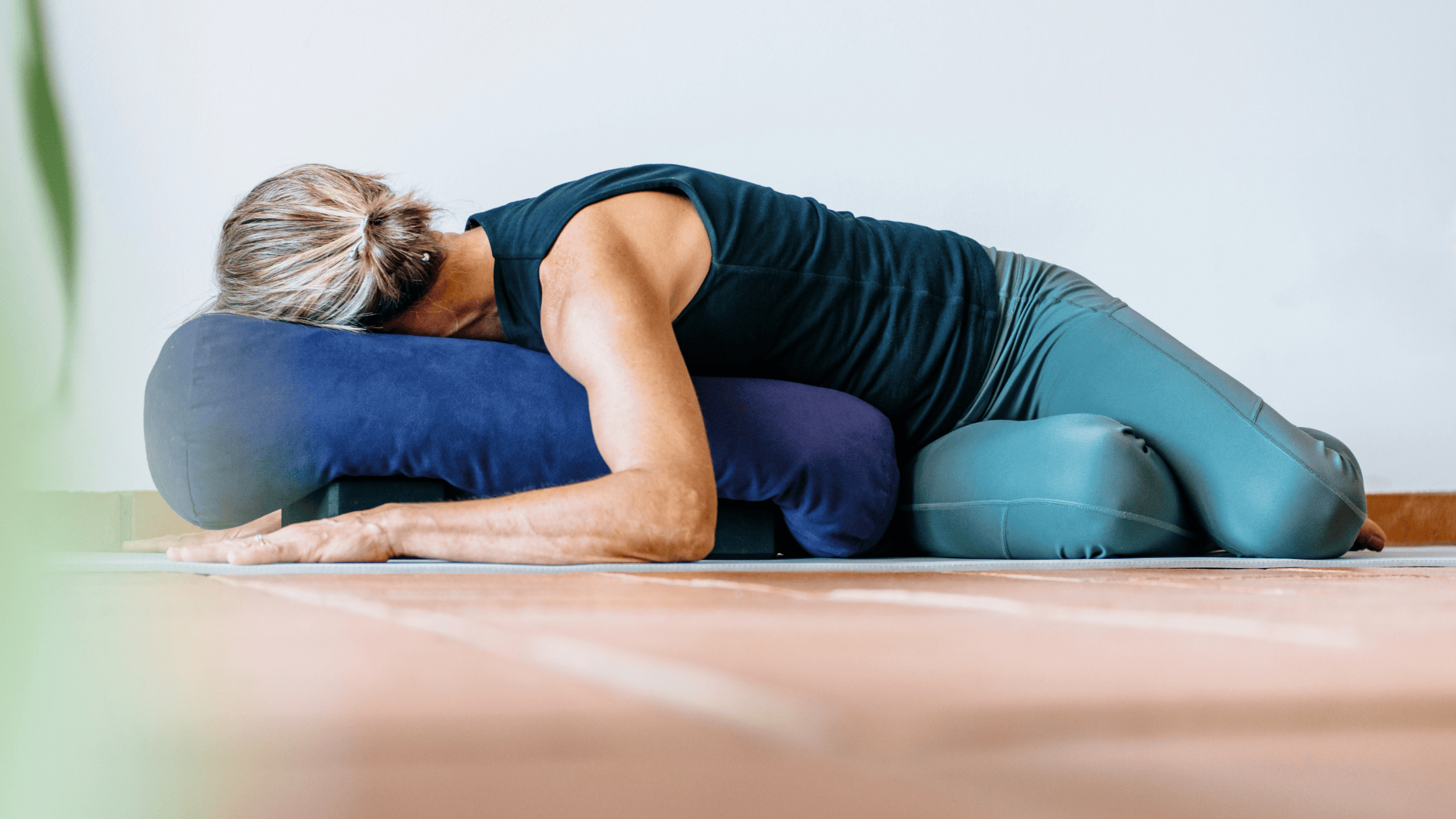
In most yoga classes, you engage your muscles to hold poses and flow between them. Yin yoga works differently. You settle into a posture with as little muscular effort as possible, use props like bolsters, blankets and blocks for support, and then stay for anywhere from two to five minutes, sometimes longer.
This slow, sustained pressure targets tissues that don't respond well to quick, dynamic movement. Fascia, ligaments and joint capsules need time and steady load to gradually lengthen and hydrate. Think of it like slowly bending a stiff piece of leather versus snapping it. The slow approach changes the tissue without damaging it.
Because movement is minimal, yin yoga naturally draws your attention inward. Breath awareness, stillness and sitting with mild discomfort become part of the practice, which is why many people describe yin yoga as equal parts physical and meditative.
The origins of yin yoga
Yin yoga as we know it today is a relatively modern practice, though its roots go much deeper.
The concept of holding passive floor postures for extended periods comes from older Taoist yoga traditions and classical Hatha yoga. In the late 1970s, martial arts champion Paulie Zink began teaching a form of Taoist Yoga that blended long-held floor poses with fluid animal-style movements. His approach laid the groundwork for what would later be called yin yoga. You can read more about his teaching history on the Paulie Zink biography page.
In the late 1980s and 1990s, Paul Grilley studied with Zink and brought in anatomy and Traditional Chinese Medicine meridian theory to refine the practice into something more structured. Sarah Powers, who trained with Grilley, helped develop and popularise the style, including coining the name "Yin Yoga", that studios around the world now teach. A detailed account of this evolution can be found in the Yin Yoga historical overview.
The result is a practice that blends centuries-old traditions with contemporary understanding of how connective tissue responds to stress and load.
How yin yoga differs from other styles
If you have tried other types of yoga, it helps to understand where yin yoga sits in the landscape.
Yin yoga vs Vinyasa
Vinyasa is flow-based. You move continuously from pose to pose, building heat and working your muscles. Yin yoga is the opposite: you hold a small number of passive poses for minutes at a time, targeting connective tissue rather than muscle. Many practitioners pair the two styles across the week for balance.
Yin yoga vs restorative yoga
These two get confused often, but they serve different purposes. Restorative yoga is designed to be completely comfortable. Every pose is fully supported by props so the body can rest and heal. Yin yoga deliberately includes mild stress on the tissues. You will feel a stretch, and you are meant to. Restorative yoga brings a tired or depleted body back to baseline. Yin yoga takes a healthy body and works to improve its flexibility and joint mobility.
Yin yoga vs Hatha yoga
Hatha is a broad category that includes many styles. A typical Hatha class involves active poses held for shorter periods with muscular engagement, plus breathwork. Yin yoga strips away the muscular engagement and slows everything down, focusing on passive holds and deep tissue release rather than strength or alignment precision.
Benefits of yin yoga
Research and practitioner experience point to a range of physical and mental benefits. A five-week intervention study published by the National Institutes of Health reported improvements in stress, wellbeing and emotional regulation following yin yoga-based sessions.
Physical benefits
Improved flexibility and joint mobility. The long, passive holds give connective tissue time to gradually lengthen, which over weeks and months leads to noticeably greater range of motion, particularly in the hips, pelvis and lower spine.
Healthier fascia. Fascia responds to sustained, gentle pressure by becoming more hydrated and resilient. Regular yin practice helps keep this tissue supple rather than stiff and restricted.
Better recovery between workouts. Athletes and people who do high-intensity training often use yin yoga as active recovery. The slow stretching helps release tension without adding further muscular fatigue.
Mental and emotional benefits
Reduced stress and anxiety. The stillness and breath focus in yin yoga activate the parasympathetic nervous system, often called the body's "rest and digest" mode. Neurophysiology insights from Next Level Neuro explain why slow, mindful practices help shift the body out of fight-or-flight.
Improved emotional regulation. Sitting with mild discomfort in a pose and learning not to react is a form of resilience training. Over time, this translates to greater emotional steadiness off the mat.
Better sleep. Many practitioners report improved sleep quality, likely linked to the nervous system down-regulation that yin yoga encourages.
Common yin yoga poses
A typical yin yoga class includes six to ten poses, mostly performed seated or lying down. Here are some of the most common:
Butterfly pose. Seated with the soles of the feet together and knees falling open. Targets the inner thighs and hips. A folded blanket under each knee can reduce intensity.
Dragon pose. A deep low lunge that opens the hip flexors and groin. Often held on each side for three to five minutes. One of the more intense yin poses.
Caterpillar pose. A seated forward fold with legs extended. Targets the entire back line of the body, including the hamstrings, lower back and spine.
Sphinx pose. Lying face down, propped on the forearms. Creates a gentle backbend that targets the lower spine and front body.
Reclining spinal twist. Lying on your back with knees dropped to one side. Releases the lower back and outer hips.
Saddle pose. Seated on the heels, leaning back. Stretches the quadriceps, hip flexors and front body. Props are commonly used to make this accessible.
Child's pose (yin variation). Knees wide, torso resting forward. A gentle hip and lower back release that is often used as a resting pose between deeper stretches.
What to expect in your first yin yoga class
If you are planning to try yin yoga for the first time, here is what a typical session looks like.
The room is usually quiet. Soft music or silence, dimmed lights and a calm atmosphere. The instructor will talk less than in a flow class and give you space to settle into each pose.
You will move through only six to ten postures in the entire class. Each one is held for two to five minutes, sometimes longer. The instructor will offer modifications and encourage you to use props like bolsters, blocks, blankets and straps to find the right level of intensity for your body. The goal is not to push to your maximum. You want to feel a clear stretch, but you should never feel sharp pain.
Most poses focus on the hips, spine, inner thighs and legs. These are areas where connective tissue is densest and responds well to sustained stretching.
Classes typically end with savasana or a quiet resting pose, giving your body a few minutes to absorb the practice.
Is yin yoga suitable for beginners?
Yes. Yin yoga is one of the most beginner-friendly styles because the poses are simple, the pace is slow and props make every pose adaptable. You do not need any prior yoga experience.
That said, "beginner-friendly" does not mean easy. Holding still for several minutes can be mentally challenging, and some poses create strong sensations in the hips and lower back. A good instructor will help you find the right depth for your body and remind you that mild discomfort is normal, but pain is not.
If you have joint injuries, hypermobility or specific medical conditions, let your instructor know before class so they can suggest appropriate modifications.
Finding a yin yoga class
Many yoga studios now include yin yoga on their weekly timetable, often scheduled in the evening or as a complement to more active classes. Some studios also offer yin yoga workshops, yin and sound healing sessions, or yin yoga combined with meditation.
The easiest way to find a class is to check your local studio's online schedule. Most studios today use booking platforms that let you browse the timetable, read class descriptions and reserve your spot online, so you can see exactly when yin classes run and what to expect before you walk in.
If you are a studio owner looking to add yin yoga to your schedule, Clubworx makes it easy to set up new class types, publish your timetable online, manage bookings and let students sign up through a branded mobile app.
Frequently asked questions
How long do you hold poses in yin yoga?
Most yin yoga poses are held for two to five minutes, though some experienced practitioners hold postures for longer. The extended hold time is what allows the stretch to reach deeper connective tissues rather than just muscles.
Is yin yoga good for beginners?
Yes. Yin yoga is one of the most accessible styles for beginners because the poses are simple, the pace is slow and props are used to make every posture adaptable to your body. No prior yoga experience is needed.
What is the difference between yin yoga and restorative yoga?
Both are slow and use props, but they serve different purposes. Restorative yoga is designed to be completely comfortable. Every pose is fully supported so the body can rest and heal. Yin yoga intentionally includes mild stress on the connective tissues to improve flexibility and joint mobility. You will feel a stretch in yin yoga; in restorative yoga, you should feel almost nothing.
Can yin yoga help with flexibility?
Yes. The long, passive holds target fascia, ligaments and joint capsules. These are tissues that respond to slow, sustained pressure rather than quick, dynamic stretching. Over weeks of regular practice, most people notice meaningful improvements in flexibility, particularly in the hips and lower back.
How often should you do yin yoga?
Two to three sessions per week is a good starting point. Yin yoga can be practised daily, but many people find it most effective when paired with more active styles like Vinyasa or strength training across the week.
What should I wear to a yin yoga class?
Comfortable, stretchy clothing that allows a full range of movement. Because yin yoga is slow and still, the room can feel cooler than a flow class, so layers or a light blanket are worth having nearby.
Do I need to bring my own mat and props?
Most studios provide mats, bolsters, blocks and blankets. If you are attending a new studio for the first time, check their website or booking page to see what is included. Many studios now list this information on their online class descriptions.

.svg)
.svg)

On this page
Stay up-to-date with Clubworx
Other reads you might like
.avif)

About the Author
